
Dots and Spots in Visual Culture
Fresh Start magazine ad, USA, 1966
Doodle Caddy
There is no limit to human creativity when it comes to inventing new art forms. This post discusses the use of Dots and Spots and aims to become a preliminary blog archive on this aspect of visual culture. Other examples can be added over the course of time to produce a more comprehensive review.
- DoodleCAD is intended for the user who wants to do basic drafting or illustration work but doesn’t need a full blown (expensive) CAD or illustration program. This free download provides unrestricted use of all application features except for print and export of images for use in other applications.
- DoodleCAD - how do I download the app on PC? If you want to download the software on your pc or mac, you could either first visit the Mac store or Windows AppStore and search for the app OR you can easily use any of the download links we provided above under the 'Download and Install' header section to download the application.
The use of dots or spots in visual culture has a long history. In the 1960s dots and spots could be found everywhere in design and advertising. The ad shown above comes from a US magazine of 1966. Wallpaper designs in the 60s often used dots in complex patterns to provide a heady mix of colours and lines.
Download this app from Microsoft Store for Windows 10 Mobile, Windows Phone 8.1, Windows Phone 8. See screenshots, read the latest customer reviews, and compare ratings for Doodle Draw.
The use of polka dots has a long history. The example below is from 1920.
Seeing dots or spots or “stars” before the eyes is associated with knocks on the head and other minor traumas that affect the central nervous system. There are also spots, specks, flecks and “cobwebs” that drift aimlessly around in our field of vision which are known as “floaters”. Ordinary eye floaters are quite common and no cause for alarm. Floaters are caused by tiny pieces of the eye’s internal vitreous humor that can break loose within the eye. Spots and floaters are more pronounced when peering at a bright, clear sky or a light computer screen. What we actually see is the shadows of the floating bits and pieces cast onto the retina. Floaters never stay still but move when our eye moves so you can never actually focus on them so it can be a little bit annoying.
Perhaps our fascination with dot patterns stems from the floaters in our eyes that simply never sit still. A wallpaper or table cloth pattern with a regular pattern of dots becomes extra attractive. Artists and designers have used dots in a huge variety of ways. One of the most significant art movements of the late 19th and early 20th centuries was Impressionism and its off-shoot Pointillism. Impressionists used short, thick, stabbing strokes of paint which was often applied impasto.
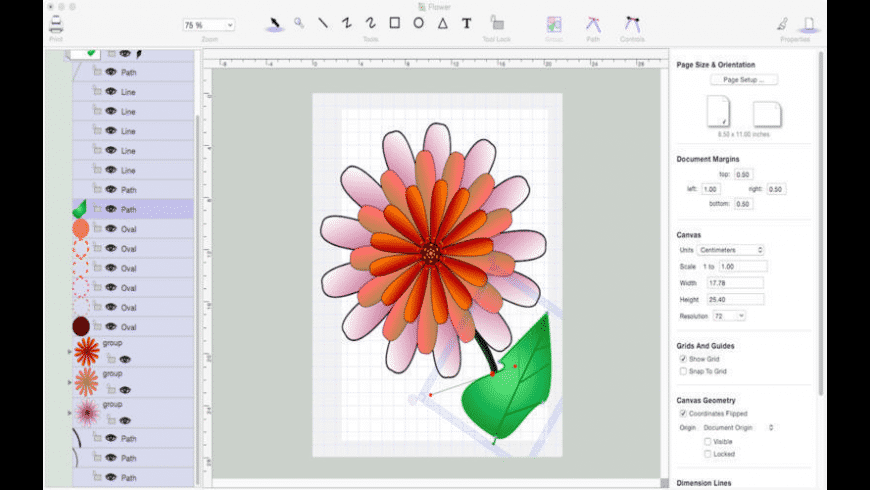
Doodle Cad Price
Georges Seurat's 'Sunday Afternoon on the Island of la Grande Jatte', 1984-6.
Vincent Van Gogh used a pointillist technique in his Self Portrait, 1887. This technique places small, distinct dots of pure, unmixed color in patterns onto the support to form an image. The sense of solidity and form are created by the observer’s own visual system by joining all the dots together to produce a harmonious whole.
One of the best known appliers of the humble dot in contemporary art is Bridget Riley. Although Riley uses lines more than dots, dots have played a role in creating some wonderful shimmering optical effects such as in ‘Fission’ (1966).
'Fission', Bridget Riley, 1963
The use of dots in conceptual art by Damian Hirst has recently received publicity in the media. The fact is dots and spots have been around for ages and there’s nothing special about using them in a painting. The ‘Cheeky Smiley’ image below adds a new twist by incorporating an emoticon, the Smiley, but a slightly cheeky one. Dave Summer’s ‘digital paintings’ are produced using DoodleCAD software. Summer argues that there is little point painting these types of work on canvas which can be messy, time-consuming and expensive. Digital production on a computer is cleaner, faster and more efficient.
What our fascination with dots and spots will lead to next is anybody’s guess.
Doodle Pad Review
Features
- Sleek, stylish design
- Multi-touch functionality
- Pen tablet technology
- Single or double finger functions
- Scroll, rotate, select, open, zoom and more
- Supports left- and right-handed use
- Integrated pen holder
- USB cable and port
- Customisable ExpressKeys
Doodle Cast Pc
Ratings & Reviews - http://store.apple.com/au/product/TX437X/A#overview
Doodle Cad Mac Download
- Written by MS from Smørum
- 11/03/2010
Wacom Bamboo Fun Pen and Touch (Medium)
works great!
- Written by CE from livermore
- 18/04/2010
I use this in photoshop and eDrawings and i just love love it. ive been looking at wacom tablets for a few years and this is an awesome value and works fantastically.
17 of 20 people found this useful
Awesome
This is great product if you like to draw in hand. With this product you can just draw in hand on the computer. It works really good and you can do some amazing illustrations on it.
Just what i needed to help me with college!!
38 of 46 people found this useful