
FET, Field Effect Transistor Circuit Design Includes:
FET circuit design basicsCircuit configurationsCommon sourceCommon drain / source followerCommon gate
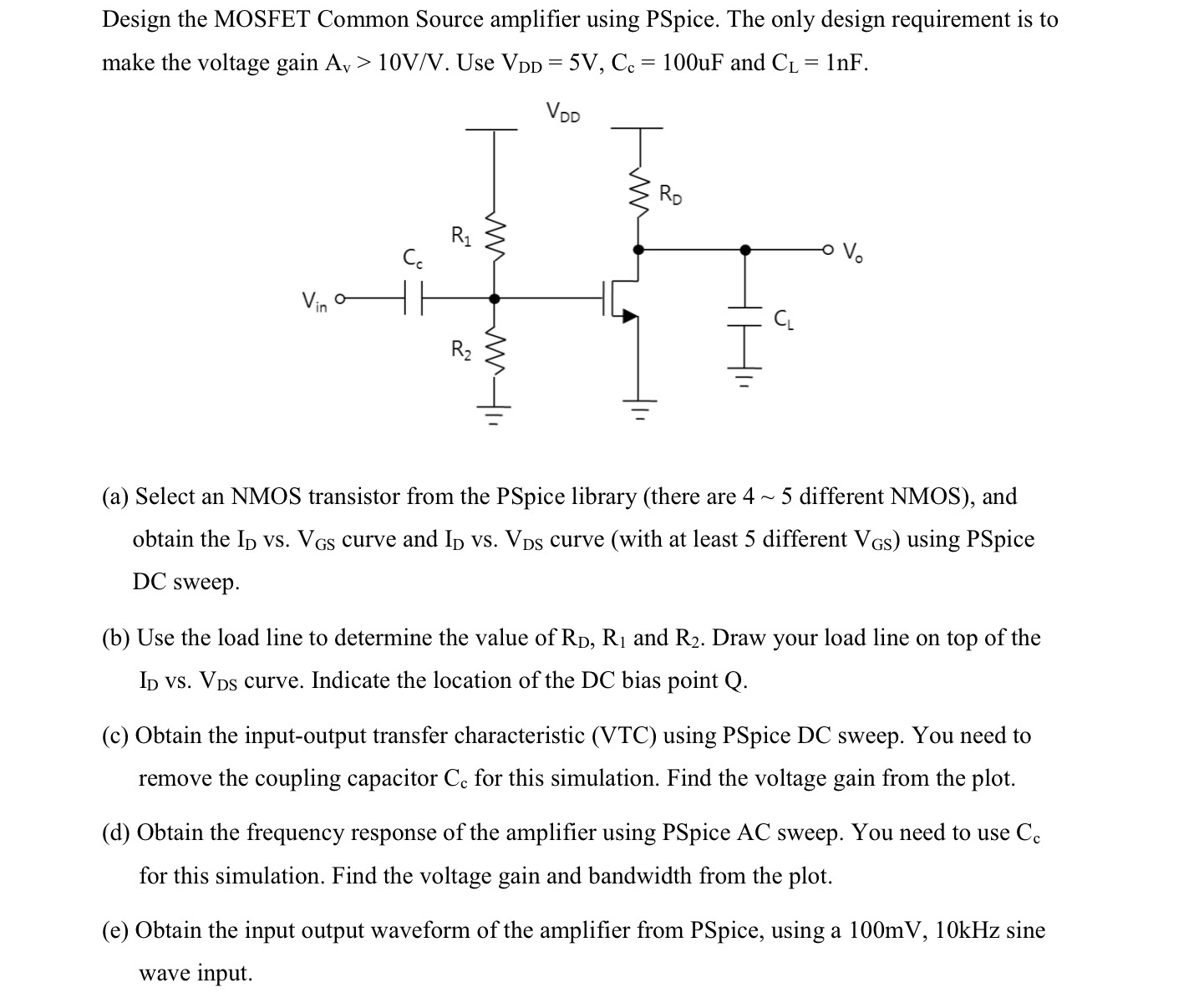
Basic Common Source Amplifier Construction with single MOSFET To make a simple common source Amplifier using N channel single MOSFET, the important thing is to achieve DC biasing condition. To serve the purpose, a generic voltage divider is constructed using two simple resistors: R1 and R2. This is a very common MOSFET with very low on-resistance and a control voltage (aka gate voltage) that is compatible with any 3-5V microcontroller or mechanical switch. This allows you to control high-power devices with very low-power control mechanisms. The MOSFET is very far the most common transistor and can be used in both analog and digital ckt. The MOSFET works by varying the width of a channel along which charge carriers flow (holes and electrons). The charge carriers enter the channel from the source and exits through the drain. The BS170 is a most common N-channel enhancement mode MOSFET which is used by many electronic designers and hobbyists; it comes in a TO-92 package and performs best with low voltage low current applications. Some basic features of BS170 MOSFET make it suitable for certain applications for example.

Most Common Mosfets
MOSFET (Metal Oxide Semiconductor Field Effect Transistor) is also known as Insulated Gate Field Effect Transistor (IGFET). MOSFET Transistor is nothing but a field-effect transistor, which consists of a thin layer of silicon oxide between both the gate (or drain) and the channel.
FET circuit configurations are the common source, common gate, and common drain formats. Each have their own characteristics of voltage and current gain as well as input and output impedance.
The choice of the FET circuit configuration or topology is one of the key design parameters on which the overall circuit design is based.
Common Mosfet
FET configuration basics

The terminology used for denoting the three basic FET configurations indicates the FET electrode that is common to both input and output circuits. This gives rise to the three terms: common gate, common drain and common source.
Common Mosfet Part Number
The three different FET circuit configurations are:
- Common source: This FET configuration is probably the most widely used. The common source circuit provides a medium input and output impedance levels. Both current and voltage gain can be described as medium, but the output is the inverse of the input, i.e. 180° phase change. This provides a good overall performance and as such it is often thought of as the most widely used configuration.
- Common drain: This FET configuration is also known as the source follower. The reason for this is that the source voltage follows that of the gate. Offering a high input impedance and a low output impedance it is widely used as a buffer. The voltage gain is unity, although current gain is high. The input and output signals are in phase.
- Common gate: This transistor configuration provides a low input impedance while offering a high output impedance. Although the voltage is high, the current gain is low and the overall power gain is also low when compared to the other FET circuit configurations available. The other salient feature of this configuration is that the input and output are in phase.
FET circuit configuration summary table
The table below gives a summary of the major properties of the different FET circuit configurations.
| FET Configuration Summary Table | |||
|---|---|---|---|
| FET Configuration | Common Gate | Common Drain (Source follower) | Common Source |
| Voltage gain | High | Low | Medium |
| Current gain | Low | High | Medium |
| Power gain | Low | Medium | High |
| Input resistance | Low | High | Medium |
| Output resistance | High | Low | Medium |
| Input / output phase relationship | 0° | 0° | 180° |
As can be seen the different configurations or topologies have different characteristics. The common source is the most widely used FET circuit configuration and it equates to the common emitter transistor amplifier. The FET common drain or source follower is used as a buffer amplifier and it equates to the transistor common emitter amplifier.
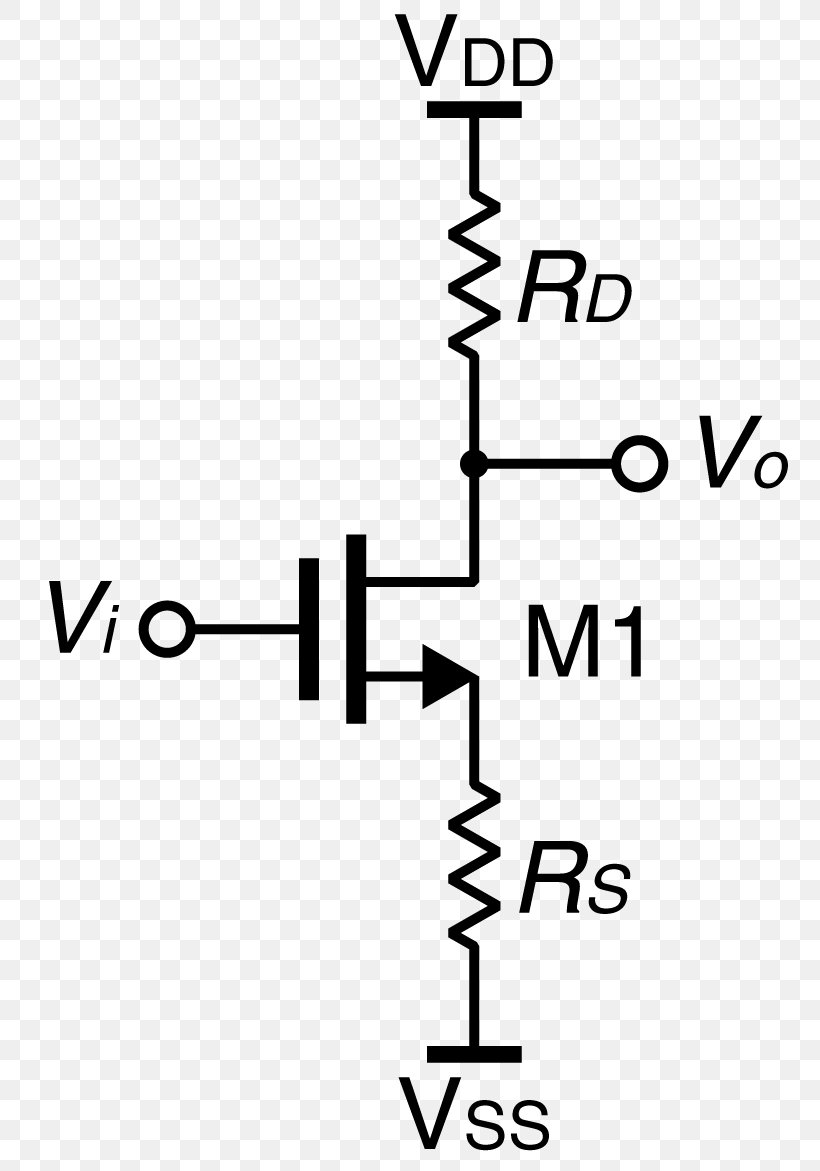
Common Mosfet Configuration
More Circuits & Circuit Design:
Op Amp basicsOp Amp circuitsPower supply circuitsTransistor designTransistor DarlingtonTransistor circuitsFET circuitsCircuit symbols
Return to Circuit Design menu . . .